October 24, 2025, Shenyang, Hotel “Druzhba.”
The second day’s program took the form of concise pitches on the investment potential of Russian regions. Presenting were Chelyabinsk Region, Khabarovsk Krai, the Republic of Khakassia, Murmansk Region, Amur Region, St. Petersburg, Tatarstan, Tver Region, Nizhny Novgorod Region, and Altai Krai; there was also a segment by Opora Rossii on SME support and launching joint projects. The regions spoke about climate and resources, agri-processing, operating and modernizing industrial sites, logistics (bridges, ports, border crossings), investor support measures, and points of cooperation with China.
October 25, 2025, Shenyang, EXPO.
On the third day, the large expo center hosted a broad showcase by Liaoning Province: major cities and prefectures highlighted their strengths - from key manufacturing and logistics to tourism and creative industries. Each stand had representatives explaining their city/prefecture, flagship enterprises, support measures, and options for joint projects with international partners.
The Russian presence was more compact, with the stands of Altai Krai and Tver Region that displayed original food products (cheeses, honey, and other delicacies), and a smaller stand featured Abrau-Durso wines from Krasnodar Krai. Together they gave visitors a clear taste of Russian brands and niches for cooperation in supplies and gastro-tourism, complementing the industrial agenda of the Chinese stands.
Business program — extended presentations.
• Amur Region: cross-border linkage with Heihe, the Blagoveshchensk-Heihe road bridge; for industrial residents - preferential TOR regime (Advanced Special Economic Zone) and turnkey sites.
• Khabarovsk Krai: development of Bolshoy Ussuriysky Island as a unique showcase of Russia–China partnership; a special accelerated-development regime, transport-logistics hubs, a tech park, and recreational clusters - all with a “short haul” to the Chinese market.
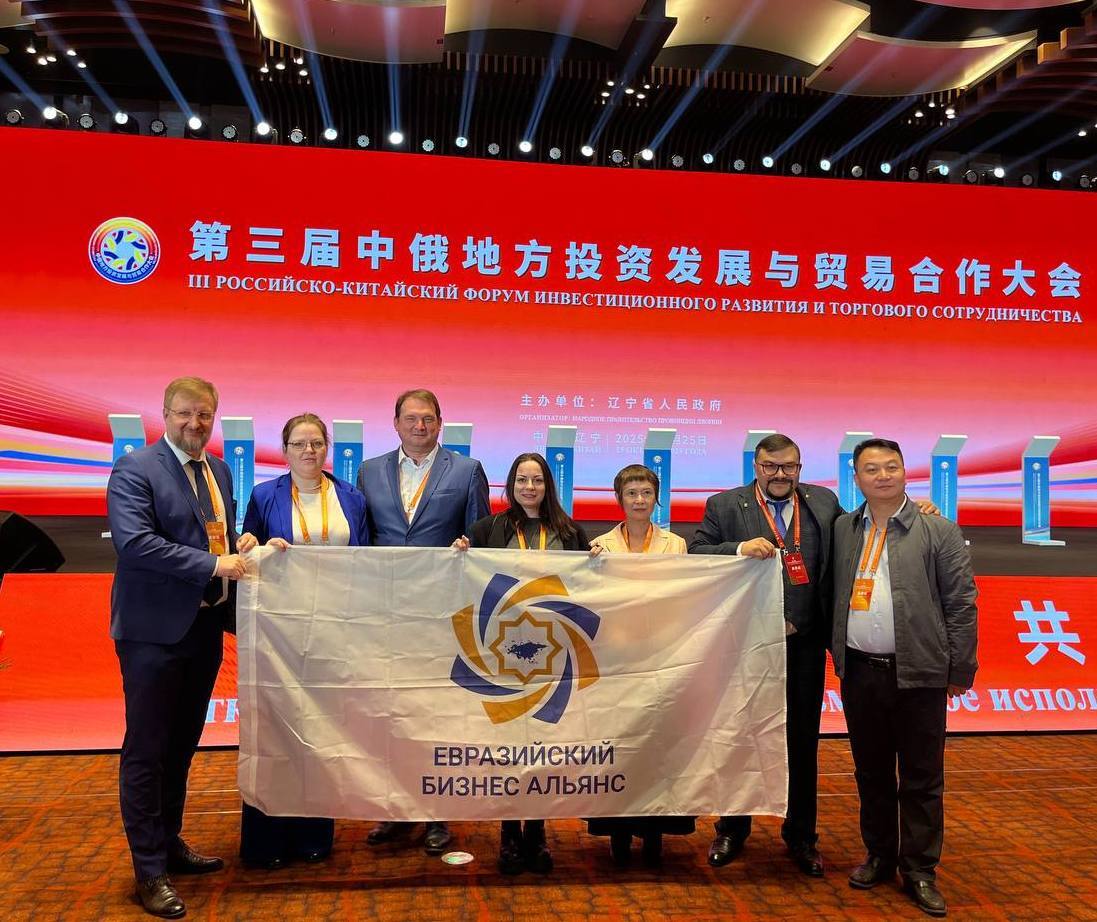
Takeaway: On both days, the Eurasian Business Alliance worked the floor as listeners and meeting participants, without speeches: the focus was on meeting regional and Chinese teams, exchanging contacts, and holding substantive talks on pilots. For the Alliance, this means new entry points and potential projects at the intersection of trade, logistics, industry, and tourism.
The second day’s program took the form of concise pitches on the investment potential of Russian regions. Presenting were Chelyabinsk Region, Khabarovsk Krai, the Republic of Khakassia, Murmansk Region, Amur Region, St. Petersburg, Tatarstan, Tver Region, Nizhny Novgorod Region, and Altai Krai; there was also a segment by Opora Rossii on SME support and launching joint projects. The regions spoke about climate and resources, agri-processing, operating and modernizing industrial sites, logistics (bridges, ports, border crossings), investor support measures, and points of cooperation with China.
October 25, 2025, Shenyang, EXPO.
On the third day, the large expo center hosted a broad showcase by Liaoning Province: major cities and prefectures highlighted their strengths - from key manufacturing and logistics to tourism and creative industries. Each stand had representatives explaining their city/prefecture, flagship enterprises, support measures, and options for joint projects with international partners.
The Russian presence was more compact, with the stands of Altai Krai and Tver Region that displayed original food products (cheeses, honey, and other delicacies), and a smaller stand featured Abrau-Durso wines from Krasnodar Krai. Together they gave visitors a clear taste of Russian brands and niches for cooperation in supplies and gastro-tourism, complementing the industrial agenda of the Chinese stands.
Business program — extended presentations.
• Amur Region: cross-border linkage with Heihe, the Blagoveshchensk-Heihe road bridge; for industrial residents - preferential TOR regime (Advanced Special Economic Zone) and turnkey sites.
• Khabarovsk Krai: development of Bolshoy Ussuriysky Island as a unique showcase of Russia–China partnership; a special accelerated-development regime, transport-logistics hubs, a tech park, and recreational clusters - all with a “short haul” to the Chinese market.
Takeaway: On both days, the Eurasian Business Alliance worked the floor as listeners and meeting participants, without speeches: the focus was on meeting regional and Chinese teams, exchanging contacts, and holding substantive talks on pilots. For the Alliance, this means new entry points and potential projects at the intersection of trade, logistics, industry, and tourism.