The visit to Arkaim became the cultural part of the Eurasian Business Alliance delegation’s program in the Southern Urals.
Arkaim was discovered by archaeologists in 1987 in what is now the Chelyabinsk Region. The ancient fortified settlement was saved from being flooded during the construction of a reservoir, and a historical and archaeological museum-reserve was subsequently established at the site. Today, it is a large open-air museum complex combining archaeological sites, reconstructions, museum exhibitions, and the unique natural landscape of the Southern Urals.
The delegation learned about the history of Arkaim, visited the museum exhibitions and explored the site of the famous settlement. The archaeological complex belongs to the Sintashta culture of the Bronze Age and provides an insight into the lives of people who inhabited the Southern Urals several thousand years ago. Arkaim had a sophisticated layout and system of fortifications, with residential and utility structures, wells, drainage systems, and evidence of metallurgical production.
Over the decades, Arkaim has acquired a significance extending far beyond archaeology. It is often referred to as a “place of power” and attracts visitors from all over Russia. For the Eurasian Business Alliance, however, the trip was primarily an opportunity to connect with the history of the Southern Urals and visit a place that reflects the ancient roots and cultural diversity of the Eurasian space.
But it was the journey to Arkaim itself that gave the trip an additional symbolic meaning.
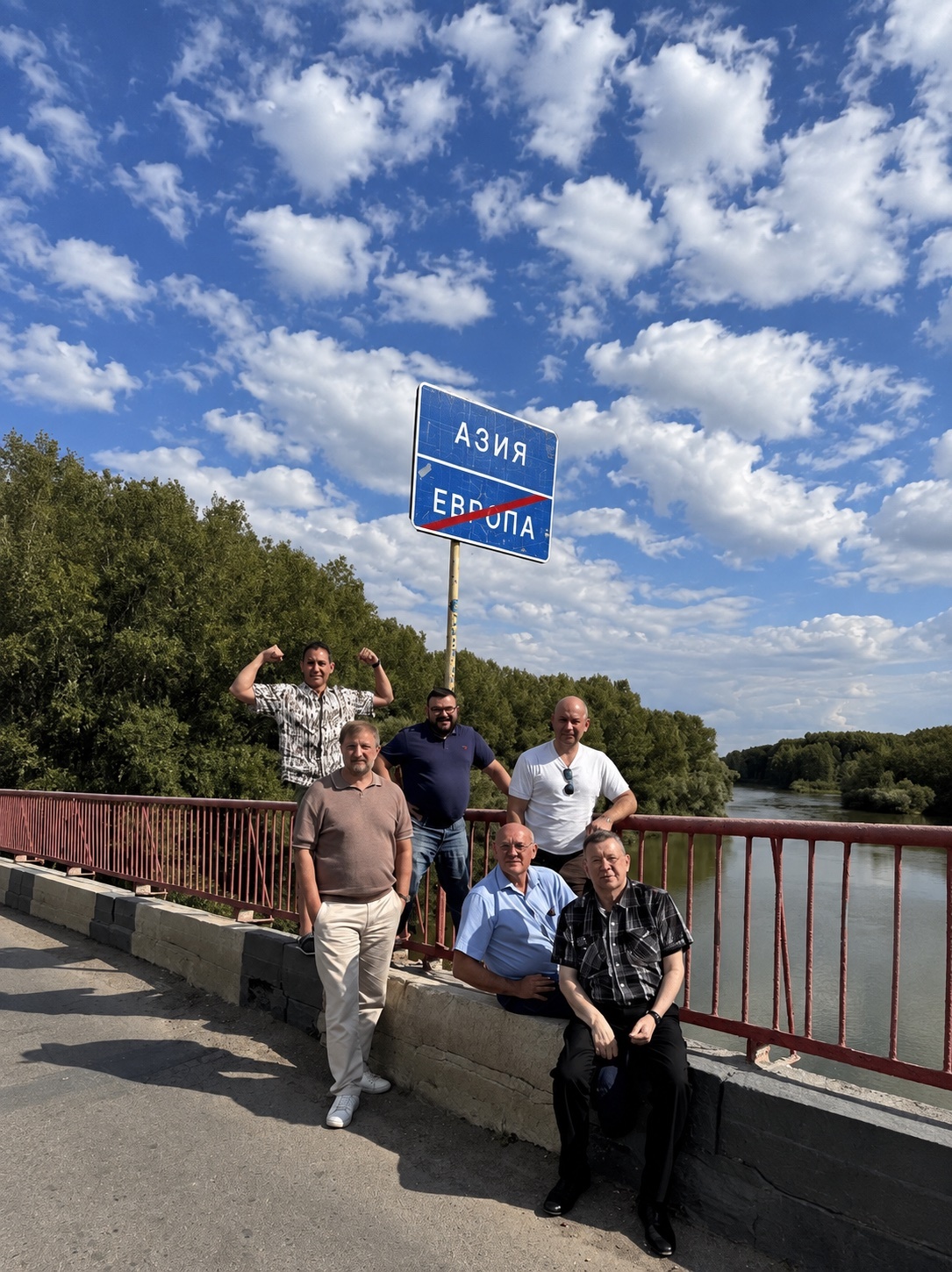
Travelling from Sibay to Arkaim, the Alliance team crossed the Ural River and the marked boundary between the two parts of the world - Europe and Asia. The Urals traditionally form part of the geographical boundary between them, although there are different approaches to defining the exact line of this border.
For the Eurasian Business Alliance, the route inevitably carried a certain symbolism: beginning the journey in Europe, crossing the border into Asia, visiting Arkaim - and then crossing the continental boundary once again on the way back.
The team even came up with its own name for this small journey - its “Eurasian baptism.”
The phrase captured the idea behind the trip remarkably well.
For the Eurasian Business Alliance, whose work is aimed at developing business, professional, and human ties across the Eurasian space, the journey became a fitting symbolic addition to its working program in the Southern Urals.
Arkaim was discovered by archaeologists in 1987 in what is now the Chelyabinsk Region. The ancient fortified settlement was saved from being flooded during the construction of a reservoir, and a historical and archaeological museum-reserve was subsequently established at the site. Today, it is a large open-air museum complex combining archaeological sites, reconstructions, museum exhibitions, and the unique natural landscape of the Southern Urals.
The delegation learned about the history of Arkaim, visited the museum exhibitions and explored the site of the famous settlement. The archaeological complex belongs to the Sintashta culture of the Bronze Age and provides an insight into the lives of people who inhabited the Southern Urals several thousand years ago. Arkaim had a sophisticated layout and system of fortifications, with residential and utility structures, wells, drainage systems, and evidence of metallurgical production.
Over the decades, Arkaim has acquired a significance extending far beyond archaeology. It is often referred to as a “place of power” and attracts visitors from all over Russia. For the Eurasian Business Alliance, however, the trip was primarily an opportunity to connect with the history of the Southern Urals and visit a place that reflects the ancient roots and cultural diversity of the Eurasian space.
But it was the journey to Arkaim itself that gave the trip an additional symbolic meaning.
Travelling from Sibay to Arkaim, the Alliance team crossed the Ural River and the marked boundary between the two parts of the world - Europe and Asia. The Urals traditionally form part of the geographical boundary between them, although there are different approaches to defining the exact line of this border.
For the Eurasian Business Alliance, the route inevitably carried a certain symbolism: beginning the journey in Europe, crossing the border into Asia, visiting Arkaim - and then crossing the continental boundary once again on the way back.
The team even came up with its own name for this small journey - its “Eurasian baptism.”
The phrase captured the idea behind the trip remarkably well.
For the Eurasian Business Alliance, whose work is aimed at developing business, professional, and human ties across the Eurasian space, the journey became a fitting symbolic addition to its working program in the Southern Urals.